You’ve picked the door style and you can picture the new kitchen. Then a worry creeps in that’s harder to shake: the frames are staying. The new doors will hang on face frames that have been there since the house was built, and you start picturing guests walking in and seeing a big difference in color between the two.
It’s one of the first things people ask before they reface. A homeowner on a woodworking forum put it the way most of us would: “what’s the likelihood I’m going to get a good match with the new doors/drawer fronts?” They had good reason to ask. Another person on the same site described exactly that result: “when you walk into the kitchen you can see a big difference in color.”
A match comes down to how the frames are finished
What’s the likelihood I’m going to get a good match with the new doors/drawer fronts?
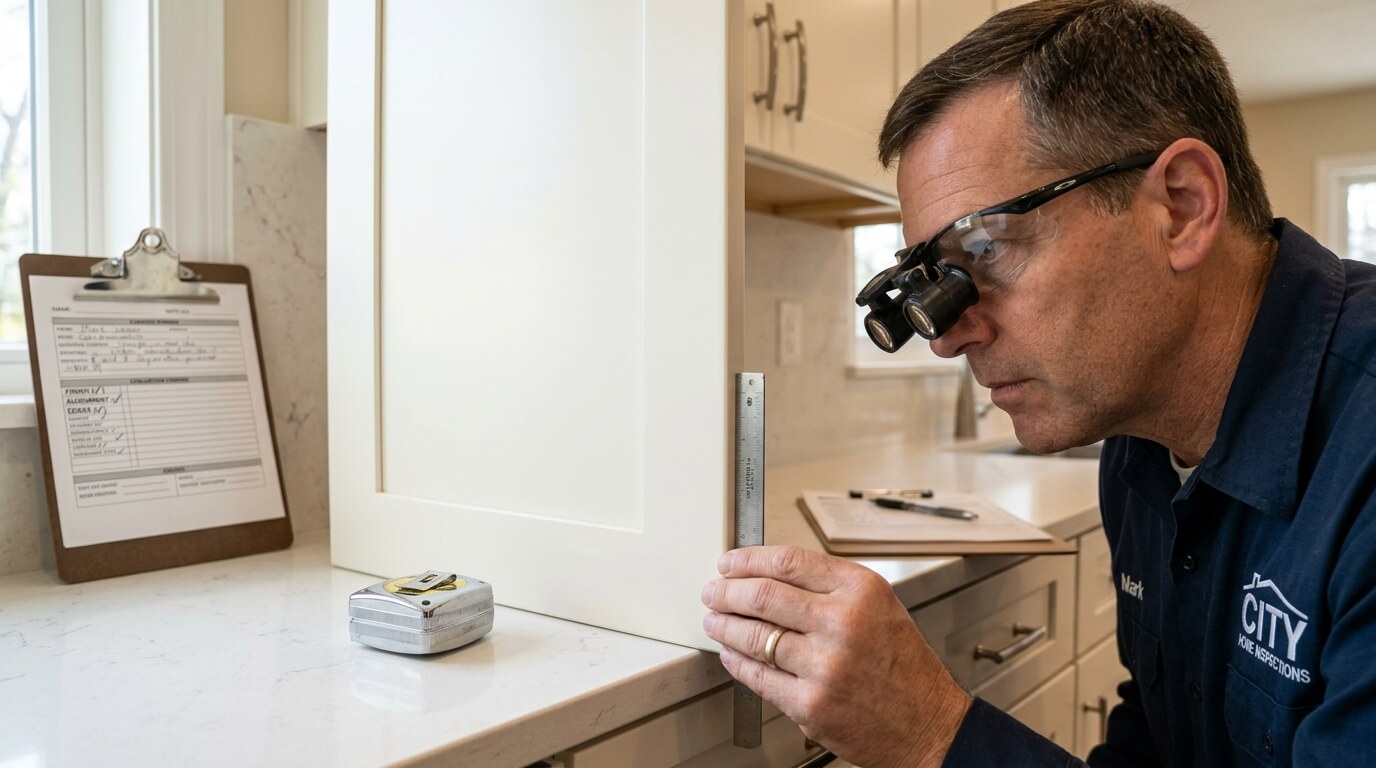
The odds are good when the frames and the new doors get the same prep, the same primer and the same topcoat in the same color, finished as one job. Mismatches almost always come from the two being treated as separate projects. Before the job starts, hold the color sample against one of your own frames in your own kitchen light.
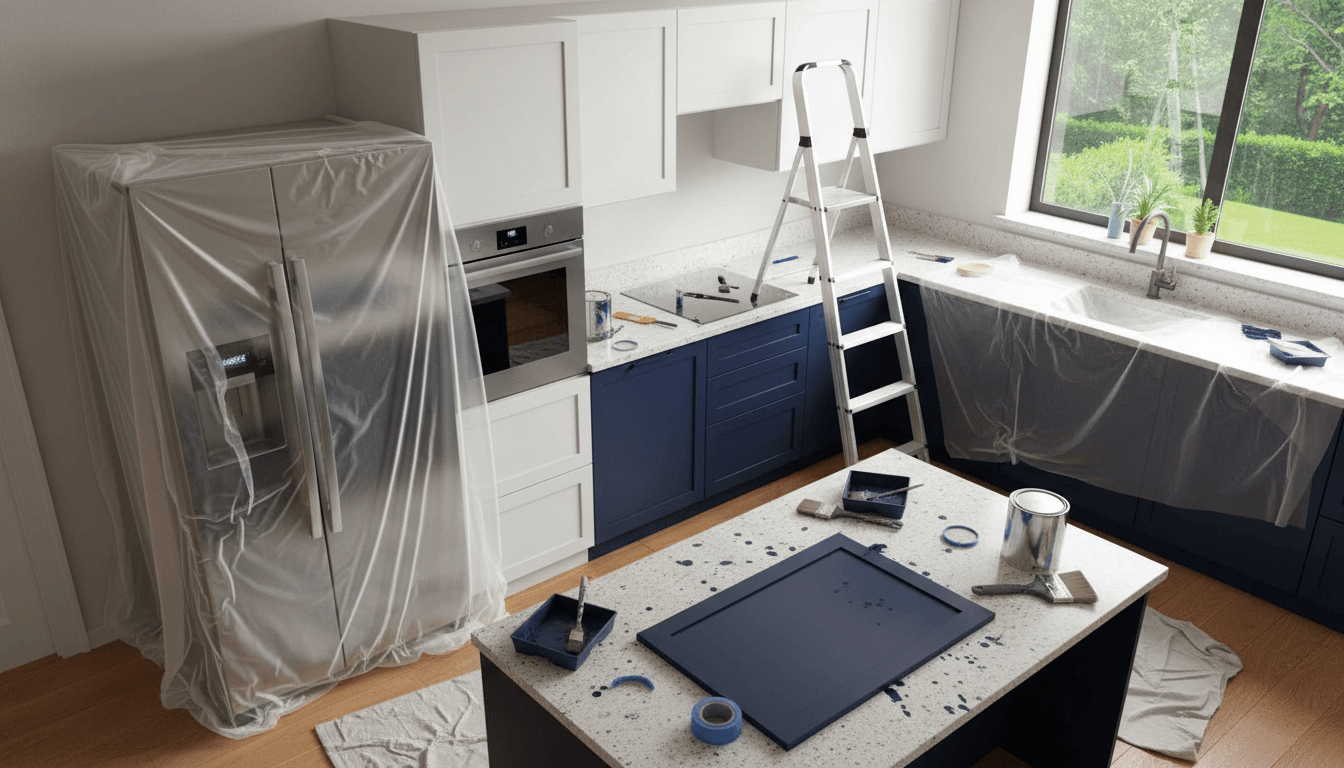
A finisher who answered that forum question put it simply: “If you do exactly to the frame what you’ve done to the doors you will get the same color but it must be done in the same process with the same procedure.” The doors are new and the frames are thirty years old, but once both have been cleaned, sanded, primed and topcoated the same way, the paint on top doesn’t know the difference.
Things go sideways when the doors arrive already finished from one place and the frames get painted afterward by someone else, with a different primer, a different sheen or a different can. Each of those small differences is easy to miss in the store, and you see every one of them once the doors are hanging on the frames.
Why the same color can still look different
This is the part that catches people out, because it can happen even when everybody did their job. One homeowner wrote that after the work was done, “the frame/molding is a bright white and the doors a warmer white.” On a carpentry forum someone else said, “I have four cabinet doors that are a different color from the rest,” even though the carpenter swore they came from the same wood and the same paint.
Sheen is usually the first suspect. A satin door next to a semi-gloss frame reflects light differently, and white is the color where that shows most, so the same white in two sheens reads as two whites.
What’s underneath matters too. Oak and maple both yellow with age, and if the old frame gets a primer that blocks that color and the new door gets a thinner one, or none, a little warmth can come through on one and not the other.
Then there’s the light. Frames are mostly narrow vertical strips and doors are big flat panels, so they catch window light at different angles. Plenty of Dallas kitchens get hard afternoon sun through a west window, and a white that looks cool at nine in the morning can look creamy by five.
None of that means the match is doomed. It’s why the frames and doors need to go through the same steps, and why checking the sample in your own light matters more than checking it under a showroom’s. That’s also the reason Cabinet Transformer’s crew treats the frames as part of every cabinet refacing job: every surface gets cleaned, degreased and sanded, then a commercial-grade primer and professional topcoats, with the color picked from real physical samples.
Painted frames match easier than stained ones
If your plan is new doors in a painted color, the match is about as reliable as it gets, because paint covers what’s underneath. A stain match is harder.
Stain soaks into the wood instead of sitting on top of it, so the color depends on the wood itself. A new maple door and a 25-year-old maple frame won’t take the same stain the same way, because the old wood has darkened and the frames may have decades of finish and kitchen grease in them. Another reply in that thread said matching the old maple cabinets to the newer doors and drawers “really depends on your skill as a wood finisher.” That’s fair, and even a skilled finisher is working against age.
So if you’re attached to a stained look, ask how the frames will be stripped and prepared, and ask to see a sample done on your actual frame wood. If what you really want is for the kitchen to stop looking dated, a painted finish across doors and frames is the more dependable route. Our article on what changes in a refacing before and after goes through which parts are new and which stay.
Style matters as much as color
A match can also fail on shape, with the color spot on. Picture a 1990s kitchen in Plano or Carrollton with cathedral-arch doors, a curved valance over the sink and decorative columns on either side of the range. Swap the doors for flat shaker and leave the trim, and the arches are still up there. Someone on a home design forum looked at a kitchen like that and said of the arched trim and columns, “That will not look right with shaker doors at all.”
Before you settle on a door, walk the kitchen and look for the pieces that belong to the old style: valances, arched trim, applied molding, columns, end panels on the island, and the crown along the top. Each of those has to come off, be replaced or be painted to suit the new doors, and the quote is the place to settle which, well before the doors go up.
Some people also ask whether the new doors can be a little larger so less of the frame shows. On some cabinets they can, but it changes how the doors clear each other at inside corners and next to walls, so that’s a question to raise when someone is standing in your kitchen with a tape measure. If you’d been weighing doing the doors yourself, the DIY refacing article is straight about what the frames take when you do them yourself.
What to check before you sign off on the color
You don’t need to be a finisher to protect yourself here. A few checks will catch nearly every mismatch before it happens.
Ask whether the frames, end panels and island sides are on the quote, and how they’ll be finished. If the quote only lists doors and drawer fronts, the frames are on you. The refacing cost article shows how the parts add up.
Ask whether the doors and frames get the same primer, the same topcoat and the same sheen.
Hold the physical sample against a frame next to your window, then look at it again in the evening under your own lights.
Pick one sample and stay with it, because two whites that look the same in the store can fight each other on the wall.
Cabinet Refacing Dallas books free in-home consultations with Cabinet Transformer, a family-owned crew that’s been refinishing Texas kitchens for more than 25 years. Cori comes out, looks at your frames and the trim around them, brings real color samples to hold against your own cabinets, and gives you a quote on the spot. You can read more about cabinet refacing, book a consultation, or call (469) 281-7313.
Last updated November 9, 2026