
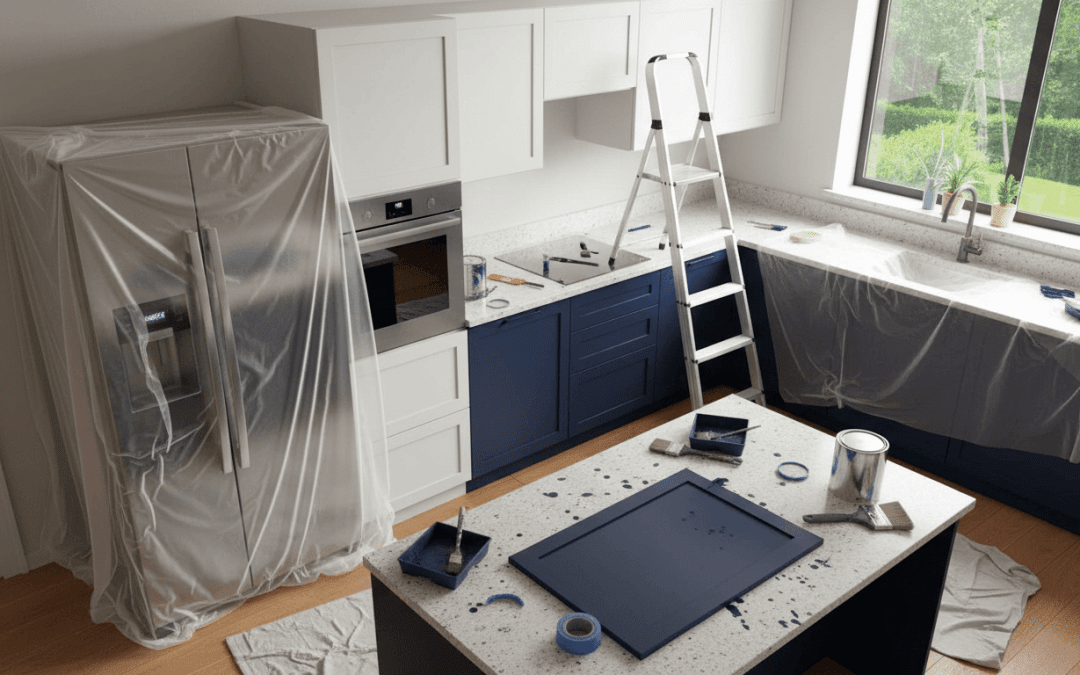
During a cabinet painting or refacing project, you may need to temporarily move or unplug your appliances to protect them and guarantee a smooth workflow. It’s important to assess their placement for easy access and minimize damage to nearby surfaces. You’ll also want to protect your countertops and floors with drop cloths. Proper ventilation is vital for safety and to achieve a great finish. If you’re curious about the steps involved, there’s more you should know.
Assessing Your Appliance Placement
Before you plunge into painting your cabinets, it’s vital to assess your appliance placement. Start by measuring the space around your appliances to guarantee you can move them without hassle.
Think about their proximity to the cabinets you’re painting; you don’t want to accidentally damage them during the process. Consider if you need to unplug or relocate any appliances temporarily. This will help prevent accidents and confirm you have enough room to work.
Finally, visualize how your newly painted cabinets will interact with your appliances to create a cohesive look in your kitchen. Planning now saves time later!
Protecting Surfaces and Ensuring Cleanliness
As you get ready to paint your cabinets, protecting surfaces and guaranteeing cleanliness is essential for a successful project.
Start by removing all appliances or moving them away from the workspace. Cover your countertops and floors with drop cloths or plastic sheeting to catch any drips or spills. Use painter’s tape to secure edges and protect walls.
Make certain to clean the area thoroughly before you begin; dust and grease can affect the paint’s adhesion. Keep cleaning supplies handy throughout the project to wipe away any accidental spills immediately.
A clean workspace helps guarantee a smooth finish and minimizes mess.
Managing Ventilation During the Project
Ensuring proper ventilation during your cabinet painting project is essential for both your safety and the quality of your finish. Open windows and doors to create a cross-breeze, allowing fresh air to circulate throughout the space.
Use fans to boost airflow, but avoid blowing dust or debris towards your freshly painted cabinets. If you’re using strong solvents or paints, consider wearing a mask to protect your lungs.
Don’t forget to monitor humidity levels, as excessive moisture can affect drying times. By managing ventilation effectively, you’ll not only safeguard your health but also enhance the overall outcome of your cabinetry.
Coordinating With Contractors and Timelines
While you might be enthusiastic to plunge into your cabinet painting project, coordinating with contractors and establishing a clear timeline is vital for a smooth process.
Start by discussing your vision and expectations with your contractor, making sure everyone’s on the same page. Set a realistic timeline that includes prep work, painting, and drying times.
Don’t forget to account for any delays that may arise. Communicate regularly with your contractor to address any concerns and adjust schedules as needed.
Final Checks and Maintenance Post-Project
After your cabinet painting project wraps up, it’s essential to conduct final checks and maintenance to guarantee everything looks great and performs well.
Start by inspecting your appliances for any paint splatters and clean them immediately.
Next, check cabinet doors and drawers for smooth operation; adjust hinges or tracks if needed.
Confirm that all appliances are reconnected properly and functioning as intended.
Finally, take a moment to wipe down surfaces and test the finishes for durability.
Frequently Asked Questions
Will My Appliances Be Moved During the Cabinet Painting Process?
Yes, your appliances will likely be moved during the cabinet painting process to guarantee a clean and thorough job.
It’s best to unplug and clear the area to make it easier for the painters.
Can I Use My Appliances While the Project Is Ongoing?
You can’t use your appliances during the project for safety reasons.
The painters need access to the cabinets, and using appliances could disrupt their work.
It’s best to wait until the project’s complete.
What Precautions Are Taken to Prevent Appliance Damage?
You’ll see protective coverings placed around your appliances, ensuring paint splatters don’t occur.
Technicians also create a safe workspace, minimizing risks.
It’s important to communicate with them about any specific concerns you might have.
How Long Should I Wait Before Using My Appliances After Completion?
You should wait at least 24 to 48 hours before using your appliances after the project’s completion.
This allows sufficient time for any paint or finishes to cure properly, ensuring everything functions safely and efficiently.
Are There Any Specific Cleaning Products Recommended for Appliances Post-Project?
You should use mild dish soap and warm water for cleaning your appliances post-project.
Avoid abrasive cleaners or harsh chemicals, as they can damage surfaces.
Always check manufacturer recommendations for specific cleaning guidelines for your appliances.
Conclusion
In conclusion, during your cabinet painting or refacing project, it’s crucial to consider your appliances’ placement and protect their surfaces. Make sure you manage ventilation effectively to keep your space comfortable and coordinate with contractors to stay on schedule. Once the project wraps up, don’t forget those final checks and maintenance tasks. By keeping these tips in mind, you’ll ensure a smooth process and a stunning kitchen transformation without damaging your appliances.