You opened the cabinet under the sink, looked at the cut edge of the side panel, and saw it: particle board, little wood chips pressed together under a paper-thin layer of oak veneer. Now you’re wondering whether you can even refinish cabinets like that, and whether it’s worth putting any money into them at all.
Most framed kitchens are a mix. The face frames and often the doors are solid oak, and the boxes behind them are particle board with a wood veneer on the outside. Kitchens built that way get refinished all the time, with more care in the prep and new pieces wherever the old ones are worn.
The short answer for a kitchen that’s mostly particle board
Can I even refinish these 80% veneered particle board, 20% genuine oak cabinets?
Usually, yes, as long as the boxes are dry, flat and solid. Veneer over particle board can’t be sanded hard or stripped and stained the way solid oak can, so it gets a light scuff, a good primer and paint, or the worn parts get replaced with new doors and drawer fronts. Particle board that has swollen from a leak is the exception, because it doesn’t flatten back out.
The 80 percent is usually the part you see least. The sides of each box, the shelves and the cabinet floors are particle board, and the parts that take the daily wear, the face frames around every opening and usually the doors, are solid wood. A finish lives or dies on those, and they’re the part that refinishes well.
How to tell what your cabinets are made of
You can work out most of it in five minutes with a flashlight.
Start with the shelf pin holes inside a cabinet. Drilled into particle board, the inside of the hole looks crumbly and granular. In plywood you’ll see thin layers stacked up, and in solid wood the grain runs right through.
Then look at a cut edge where the veneer stops, usually the front edge of a shelf or the back of an end panel. Solid wood shows grain continuing around the edge. Veneer is a skin, and you’ll see a seam where it meets the core or a strip of edge banding glued on.
Last, check whether the wood look is real wood at all. If you can see a printed pattern that repeats, or the surface feels like plastic, it’s laminate or vinyl and not a true wood veneer. That’s a different job, because paint has a much harder time holding on to it and refinishing it never looks like wood again.
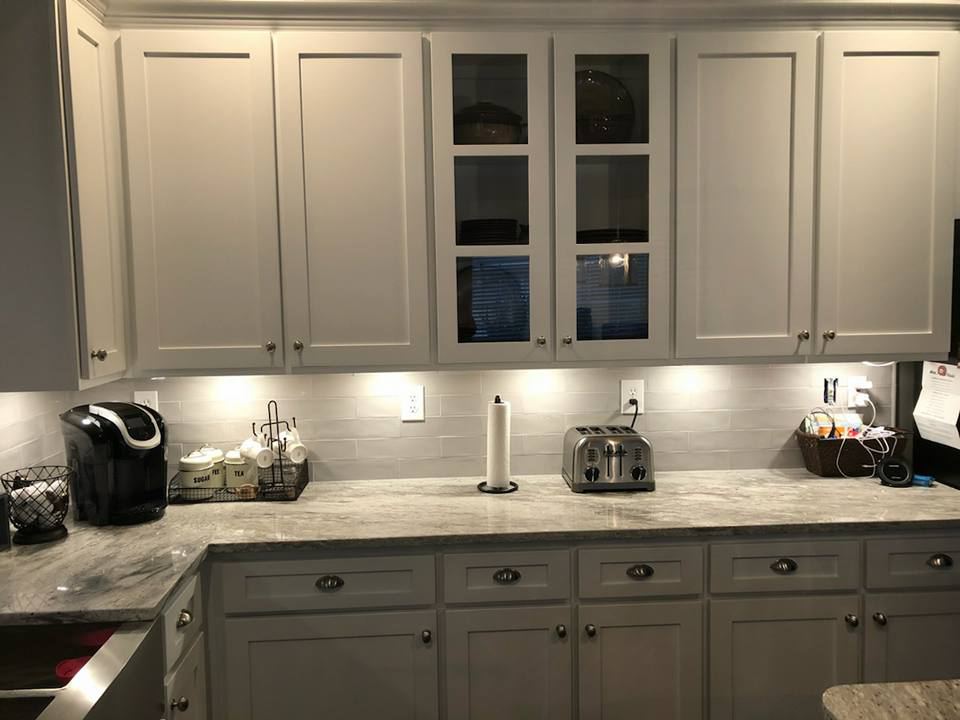
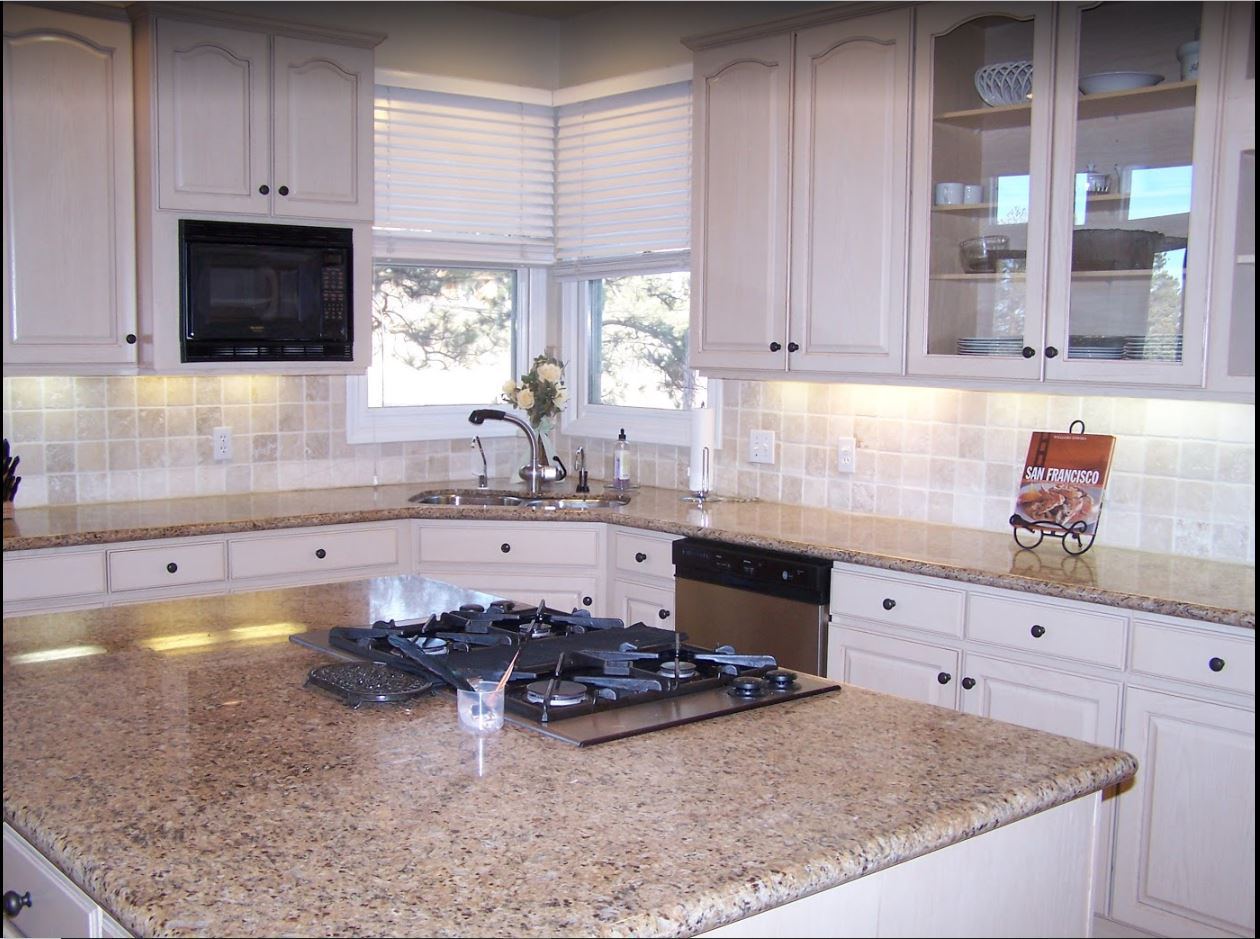
In the brick traditionals built in Plano, Carrollton and Far North Dallas through the 1980s and 1990s, the usual answer is honey oak face frames and raised-panel or cathedral-arch doors in solid wood, hung on veneered particle board boxes. The 2000s houses tend to have the same build in stained maple or cherry. Either way, those kitchens are built the way the question describes.
What veneered particle board will take, and what it won’t
Veneer is real wood, but it’s thin, and some of it is so thin you can’t sand it even once without going through. That’s why sanding a veneered side panel down to bare wood for a new stain is the riskiest thing you can do to it. Go through in one spot and the particle board shows, and stain won’t match on it.
Paint is the easier path. Every surface still gets cleaned and degreased, because kitchen grease is what makes paint peel, and then the veneer gets a scuff, enough to dull the old finish so primer can grip. On the solid oak face frames the crew can sand as normal. Oak’s open grain does show through paint unless it’s filled, and whether oak cabinets show grain when they’re painted comes down to that prep step.
If the veneer is lifting at an edge, it has to be glued down and dried before any primer goes on. Paint over a loose edge and the edge lifts again, taking the paint with it.
Refacing sidesteps a lot of this. With cabinet refacing, Cabinet Transformer’s crew takes the old doors and drawer fronts off and replaces them with new five-piece doors and drawer faces, then paints the face frames to match. The boxes and the counters stay where they are, so the dark speckled granite so many of these Dallas kitchens have stays put and the layout doesn’t change.
Where particle board does stop you
Water is the one hard limit. Particle board swells when it gets wet, and the swelling doesn’t go back down after it dries. A slow drip under the sink or a dishwasher supply line that let go overnight will leave the cabinet floor bubbled and soft at the front edge, and no finish fixes that.
So before anyone talks about color, open the sink base and the cabinet beside the dishwasher and press on the bottom edge. Firm and flat is fine, even if it’s stained. Soft, crumbly or puffed up means that box needs repair before it gets a finish. That’s a different conversation from refacing, and it’s worth having first.
The other limit is movement. Much of Dallas sits on Blackland Prairie clay that shrinks and swells with the seasons, and slab houses here shift enough to make old cabinet doors rub or hang crooked. On framed cabinets the hinges screw into the solid face frame, not the particle board, so a door that’s out of line usually needs a hinge adjustment, and the box behind it is fine.
What Cori looks at during the consultation
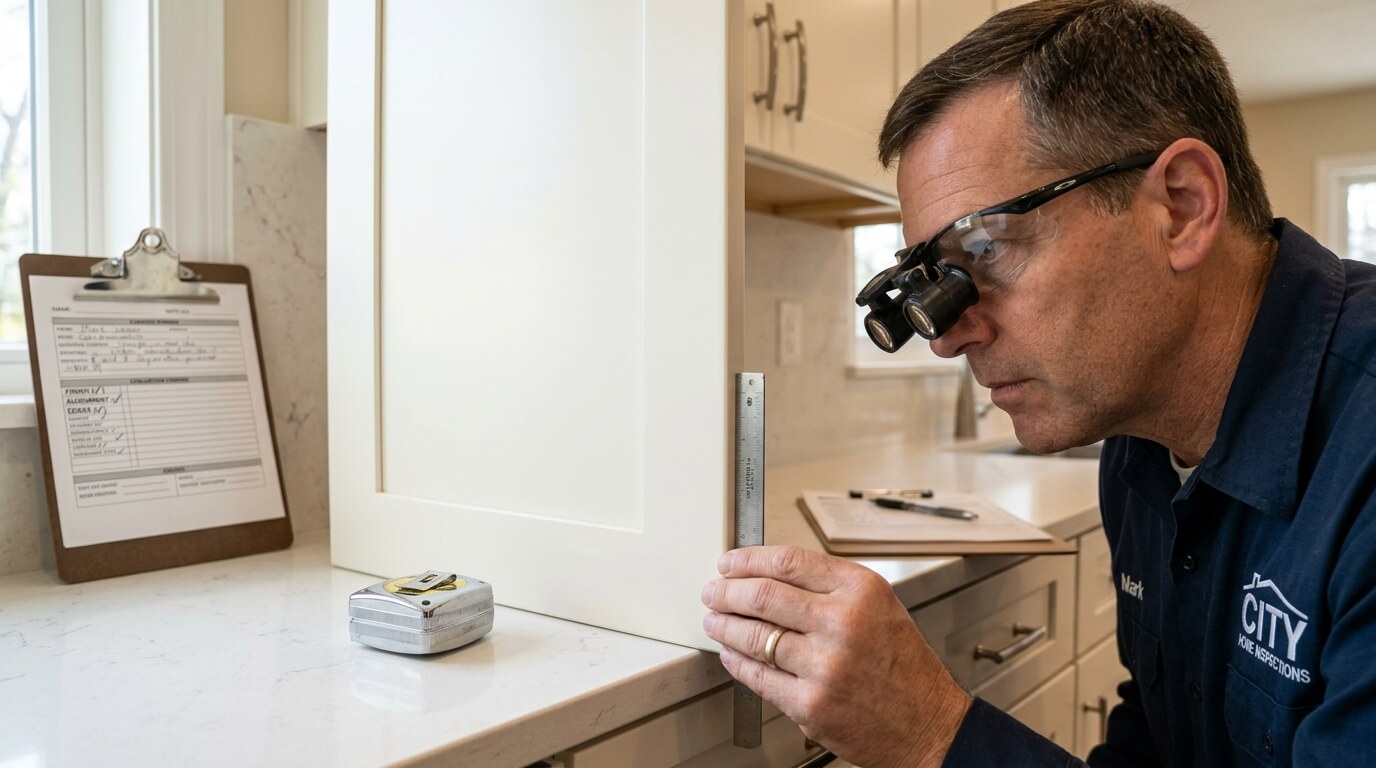
The consultation is free and happens in your kitchen. Cori opens the doors, checks what the boxes are made of, measures and brings real physical color and door samples, so you’re not guessing from a screen. You get a no-pressure quote on the spot.
On a kitchen like this one, it’s worth asking her straight out whether the boxes are solid, whether any of the veneer is lifting, and whether the doors you have now will hold paint or new doors would get you closer to the look you want. If the drawers are the tired part, Cabinet Transformer can put in new drawer boxes, and they also convert shelves to drawers, which is often where an older kitchen gains the most.
If the new doors and the old frames are both getting finished, ask how they’ll match. When the frames and doors go through the same prep, primer and topcoat as one job, new doors match the old frames far more reliably than when they’re treated as separate projects.
And if you’re weighing doing it yourself, stick-on veneer over old frames is the part that tends to go wrong first. It bubbles and peels at the edges around the range and above the dishwasher, which is why the DIY refacing guide suggests painting the frames instead.
Most painting and refacing jobs take three to five days. The doors and hardware come off, every surface is cleaned, degreased and prepped, the commercial-grade primer and professional topcoats go on, and the doors and hardware go back up and get inspected.
So is your kitchen worth it?
If the boxes are dry and solid, a kitchen that’s 80 percent particle board can still be refinished or refaced, and the money goes into the frames and doors you look at every day.
Cabinet Refacing Dallas books the visit and Cabinet Transformer does the work, from Cori’s consultation through Charles’s install. See how cabinet refacing works, book a consultation, or call (469) 281-7313.
Last updated November 25, 2026