
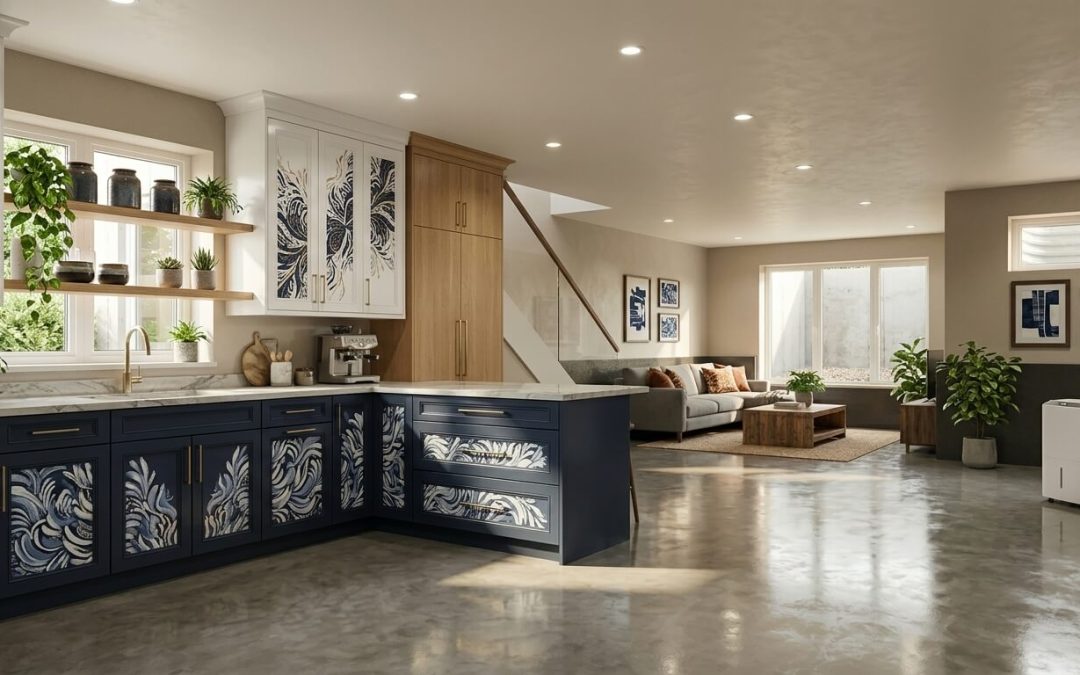
When painting cabinets in kitchens with integrated pantry systems, start by choosing a color that complements your overall kitchen style. Next, prepare your cabinets by emptying them, cleaning thoroughly, and sanding surfaces. Use painter’s tape for clean edges and apply multiple thin coats for a finish that’s smooth and durable. Remember to maintain your newly painted cabinets by using mild soap and addressing any chips promptly. Discover techniques to perfect your cabinet transformation as you continue exploring!
Choosing the Right Color for Your Cabinets
How do you choose the perfect color for your kitchen cabinets? Start by considering the overall style of your kitchen. If you have a modern space, bold colors like navy or emerald can add drama.
For a classic look, soft whites or grays work beautifully. Next, think about your existing decor and appliances. Choose a color that complements them, ensuring harmony in the space.
Natural light is also essential; lighter shades can brighten a dim area while deeper hues create a cozy feel. Finally, don’t forget to test samples on your cabinets—seeing the color in your kitchen’s lighting can make all the difference.
Preparing Your Cabinets for Painting
Once you’ve chosen the perfect color for your cabinets, it’s time to prepare them for painting.
Start by emptying the cabinets completely and removing all hardware, like knobs and hinges. Clean the surfaces thoroughly with a degreaser to eliminate grease and grime.
Next, sand the cabinet surfaces lightly to promote adhesion, and fill any holes or imperfections with wood filler. Don’t forget to wipe down the surfaces again to remove dust.
Finally, apply painter’s tape around edges and any areas you want to protect. With everything prepped, you’re ready to plunge into the exciting painting process!
Techniques for Painting Around Integrated Pantry Systems
Painting around integrated pantry systems can be a bit tricky, but with the right techniques, you can achieve a flawless finish.
First, use painter’s tape to mask the edges where the pantry meets the cabinets. This helps prevent paint from seeping into unwanted areas.
Next, choose a high-quality brush for precise application in tight spots. If you’re using a sprayer, practice on cardboard to master your technique before tackling the pantry.
Work in thin layers to avoid drips, and always allow adequate drying time between coats.
Finally, be patient and take your time for the best results.
Achieving a Smooth and Durable Finish
Achieving a smooth and durable finish is key to making your kitchen cabinets look professional and long-lasting. Start by sanding the surfaces thoroughly to remove any imperfections.
Use a high-quality primer to create a solid base, ensuring even coverage. Choose a durable paint, preferably with a satin or semi-gloss finish, as these resist wear and tear.
Apply multiple thin coats rather than one thick coat; this helps prevent drips and uneven textures. Allow each coat to dry completely before the next application.
Finally, consider using a paint sprayer for a flawless finish that brushes simply can’t achieve.
Maintenance Tips for Painted Cabinets
To keep your painted cabinets looking fresh and vibrant, regular maintenance is essential.
Start by wiping them down weekly with a soft, damp cloth to remove dust and grease. Avoid harsh chemicals; instead, use a mild soap solution if needed. For stubborn stains, gently scrub with a soft sponge. Always dry the surface afterward to prevent moisture damage.
If you notice chips or scratches, touch them up promptly with matching paint.
Finally, consider applying a clear topcoat every few years for added protection.
Frequently Asked Questions
How Long Does Cabinet Paint Typically Last?
Cabinet paint typically lasts between five to ten years, depending on factors like the quality of paint, application method, and wear and tear.
Regular maintenance and care can help extend its lifespan considerably.
Can I Paint Over Stained Cabinets?
Yes, you can paint over stained cabinets.
Just make sure to clean them thoroughly, lightly sand the surface, and use a good primer.
This’ll help the new paint adhere better and look great.
Do I Need to Remove Cabinet Hardware?
Yes, you should remove cabinet hardware before painting.
It helps guarantee a smooth finish and prevents any damage to the hardware.
Plus, it makes the painting process easier and more efficient for you.
What Type of Paint Is Best for Kitchens?
For kitchens, you’ll want to use a durable, moisture-resistant paint.
Semi-gloss or satin finishes work best, as they’re easy to clean and resistant to stains.
Always choose high-quality paints for ideal results.
Should I Use Primer Before Painting Cabinets?
Yes, you should use primer before painting cabinets.
It helps the paint adhere better, prevents stains from bleeding through, and guarantees a smooth finish.
Skipping primer might lead to uneven color and durability issues.
Conclusion
In conclusion, painting your kitchen cabinets, especially around integrated pantry systems, can transform your space beautifully. By choosing the right color, prepping your cabinets properly, and using effective painting techniques, you’ll achieve a stunning finish that lasts. Don’t forget to follow maintenance tips to keep your newly painted cabinets looking fresh and vibrant. Embrace your creativity and enjoy the process—your kitchen deserves a makeover that reflects your style!