
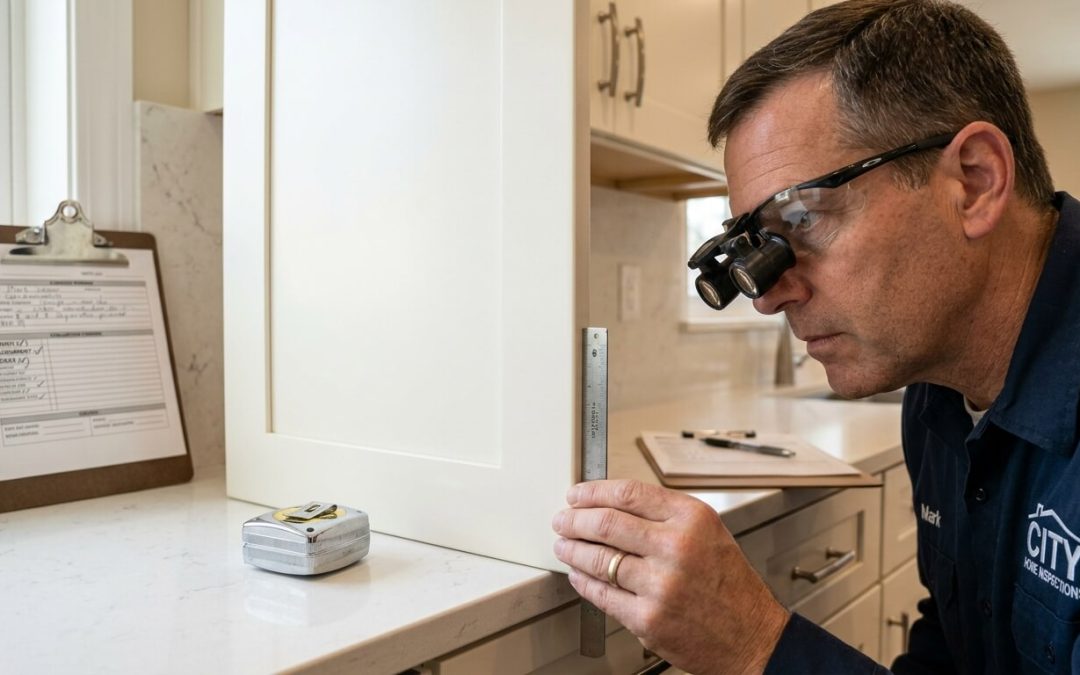
Inspectors typically look for quality workmanship in cabinet refacing or painting, ensuring surfaces are smooth and finishes are even. They check that safety standards are met, like using low VOC products and ensuring proper ventilation. Inspectors also assess the durability of materials used, looking for high-quality paints and resistant finishes. Proper finishing techniques, such as thorough surface preparation and allowing complete drying, are essential. Finally, they verify compliance with local building codes to avoid any issues. You’ll find more details on this topic.
Quality of Workmanship
When it comes to cabinet refacing or painting, the quality of workmanship can make all the difference in the final result. You want to guarantee that every surface is smooth and free of imperfections. Inspectors look for even paint coverage, proper sealing, and flawless alignment of cabinet doors.
If you’ve chosen to reface, the materials should fit snugly and match your design vision. Any gaps or uneven edges can undermine the entire project. Pay attention to detail, as this not only affects aesthetics but also durability.
A well-executed job will impress inspectors and enhance your space’s overall appeal.
Adherence to Safety Standards
Quality workmanship isn’t just about aesthetics; it also involves adhering to safety standards.
When you refinish or paint cabinets, guarantee the products used are low in volatile organic compounds (VOCs) to maintain indoor air quality. Inspectors check for proper ventilation during the process to minimize fume exposure.
Additionally, make certain you’re following local regulations regarding hazardous materials disposal. If you’re using spray paint, wear appropriate safety gear like masks and goggles to protect yourself.
Durability of Materials Used
Although you might be tempted to choose the most visually appealing finishes for your cabinets, the durability of the materials you use is equally vital.
Selecting high-quality paints and coatings can make a significant difference in how well your cabinets withstand daily wear and tear. Look for finishes that are resistant to chipping, fading, and moisture.
Also, consider materials that can endure the heat and humidity of your kitchen environment. Investing in durable materials not only enhances your cabinets’ lifespan but also keeps them looking fresh and vibrant for years to come, ultimately saving you time and money on repairs.
Proper Finishing Techniques
To achieve a professional-looking finish on your cabinets, understanding proper finishing techniques is essential.
Start with thorough surface preparation; clean, sand, and prime as needed. Use high-quality paint or stain, applying it evenly with a brush or sprayer. Thin coats are key—don’t rush the process.
Allow each coat to dry completely before adding another, ensuring smooth results. Sand lightly between coats to eliminate imperfections.
Finally, seal your finish with a clear topcoat for added durability and shine.
Compliance With Local Building Codes
Guaranteeing compliance with local building codes is vital when refacing or painting cabinets. You need to check regulations specific to your area, as these can dictate materials, finishes, and safety standards.
Failing to meet these requirements can lead to fines or forced removal of your work. Review guidelines about ventilation, fire safety, and environmental impact, especially if you’re using certain paints or finishes.
It’s also smart to consult with local inspectors or a professional contractor to navigate the rules. By prioritizing compliance, you not only protect your investment but also guarantee a safe and durable result for your cabinets.
Frequently Asked Questions
How Long Should I Wait Before Using My Newly Refinished Cabinets?
You should wait at least 24 to 48 hours before using your newly refinished cabinets.
This allows the paint or finish to cure properly, ensuring durability and preventing damage during initial use.
Can I Paint Over Existing Cabinet Hardware After Refacing?
You can paint over existing cabinet hardware after refacing, but it’s best to use a high-quality spray paint for a smooth finish.
Just make sure to clean and prep the hardware properly beforehand for ideal results.
What Types of Finishes Are Best for Kitchen Cabinets?
You’ll want to choose durable finishes like semi-gloss or satin for kitchen cabinets.
These options resist moisture and stains, making them easier to clean, while also providing a polished look that complements your kitchen design.
Will Refacing Cabinets Increase My Home’s Resale Value?
Yes, refacing cabinets can boost your home’s resale value.
It enhances the kitchen’s appearance, attracts potential buyers, and can make your home more appealing in a competitive market.
It’s a smart investment for your property.
How Do I Maintain My Cabinets After Refacing or Painting?
To maintain your cabinets after refacing or painting, regularly clean them with a mild detergent, avoid harsh chemicals, and use coasters or mats to prevent scratches.
Control humidity to prevent warping and guarantee long-lasting beauty.
Conclusion
In conclusion, when inspectors evaluate your cabinet refacing or painting project, they focus on the quality of workmanship, safety standards, durability of materials, finishing techniques, and compliance with local building codes. By ensuring you meet these criteria, you can guarantee a successful renovation that not only looks great but also stands the test of time. So, keep these key factors in mind to make sure your cabinets pass inspection with flying colors!