
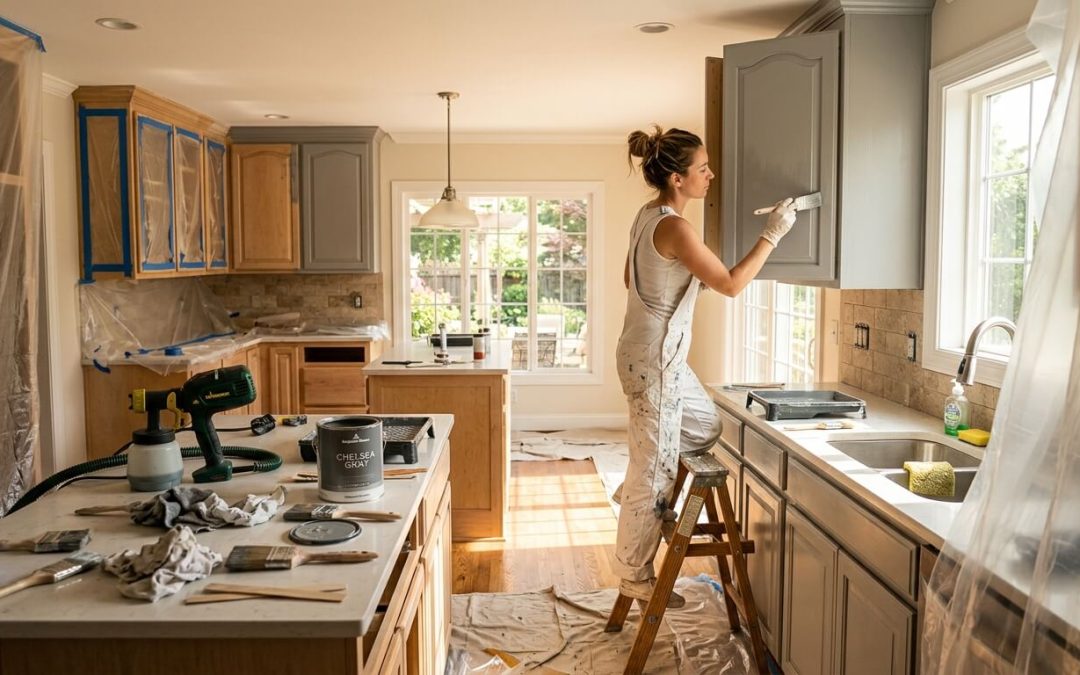
When you decide to paint cabinets while living in your home, you’ll want to assess their condition and set clear goals. Choose high-quality paint and materials, then prepare your space by clearing furniture and covering surfaces. Follow a step-by-step process, ensuring each coat dries thoroughly before reassembly. Maintain your kitchen or bathroom by designating temporary cooking areas and limiting access to painted zones. If you stick around, you’ll discover more tips to make this project a breeze.
Assessing Your Cabinets and Setting Goals
Before diving into cabinet painting, you need to assess your cabinets and set clear goals.
Start by checking the condition of your cabinets—look for any damage, wear, or outdated hardware. Decide if you want a fresh look or a complete overhaul.
Think about the style you envision and how it’ll fit with your home’s aesthetic. Setting specific goals will help streamline the process and keep you motivated.
Do you want to brighten the kitchen or create a cozy, rustic feel? Clarifying these objectives now will guide you through the painting journey and help guarantee your satisfaction with the final result.
Choosing the Right Paint and Materials
Now that you’ve assessed your cabinets and set your goals, it’s time to choose the right paint and materials for your project.
Opt for a high-quality paint specifically designed for cabinetry, like acrylic or enamel, as these provide durability and a smooth finish. Don’t forget to select a primer to enhance adhesion and prevent peeling.
When it comes to brushes or rollers, use foam or synthetic options for an even application. Additionally, consider using a topcoat for extra protection.
Make sure to choose materials that suit your home’s environment, ensuring they withstand daily wear and tear while looking great.
Preparing Your Space for Painting
As you gear up to paint your cabinets, preparing your space is essential for achieving the best results and minimizing disruption in your home.
Start by clearing the area around your cabinets, moving any furniture or appliances out of the way. Cover floors and nearby surfaces with drop cloths or plastic sheeting to protect against spills.
Guarantee adequate ventilation by opening windows or using fans. Remove cabinet doors and hardware, labeling them for easy reassembly.
Finally, gather your painting supplies, like brushes, rollers, and painter’s tape, so you’re ready to tackle the project without unnecessary interruptions.
Step-by-Step Painting Process
Once you’ve prepared your space, it’s time to plunge into the step-by-step painting process for your cabinets.
First, remove all hardware and doors, labeling them for easy reinstallation. Next, clean the surfaces thoroughly to guarantee proper adherence.
Apply a primer to prevent stains and enhance paint durability. Once dry, use a high-quality paintbrush or sprayer to apply your chosen paint evenly, starting with the interiors of the cabinets.
After the first coat dries, sand lightly and apply a second coat. Finally, let everything cure completely before reattaching the doors and hardware, ensuring a smooth, professional finish.
Maintaining Your Kitchen or Bathroom During the Project
While your cabinets undergo transformation, it’s essential to maintain a functional kitchen or bathroom.
Create a temporary cooking space by setting up a counter or table with essential appliances, like a microwave or toaster oven. Keep frequently used items within easy reach, storing less essential items away.
Limit access to the areas being painted, ensuring safety and minimizing dust. If possible, designate one sink for washing up, and use disposable plates and utensils to simplify cleanup.
Communicate with your painting team about any specific needs, so they can accommodate your daily routine during this renovation process. Your comfort matters!
Frequently Asked Questions
How Long Will the Painting Process Take in My Home?
The painting process typically takes about three to five days, depending on the size of your kitchen and the complexity of the cabinets.
You’ll need to allow for drying time and possible touch-ups afterward.
Will I Need to Vacate the Premises During the Project?
You won’t need to vacate your home during the project.
However, you should prepare for some disruption, as the painters will be working in your kitchen or bathroom.
Plan accordingly to minimize inconvenience.
What if I Have Pets or Small Children at Home?
You can definitely stay at home with pets or small children, but it’s best to keep them away from the work area.
Guarantee proper ventilation and use non-toxic paints to keep everyone safe.
Can I Use My Kitchen or Bathroom During Painting?
You can’t use your kitchen or bathroom while painting.
The fumes and wet paint can be harmful, so it’s best to avoid these areas until everything’s dry and safe for you and your family.
How Can I Manage Dust and Fumes During the Project?
You can manage dust and fumes by sealing off the area, using drop cloths, running an air purifier, and keeping windows open for ventilation.
Wearing a mask also helps protect you from inhaling harmful particles.
Conclusion
In conclusion, painting your cabinets while living in your home can be a rewarding project with the right approach. By assessing your cabinets, choosing the right materials, and preparing your space carefully, you can achieve stunning results. Follow the step-by-step painting process and maintain your kitchen or bathroom during the project to minimize disruption. With a little patience and effort, you’ll enjoy a fresh, updated look that enhances your home’s beauty and value.