
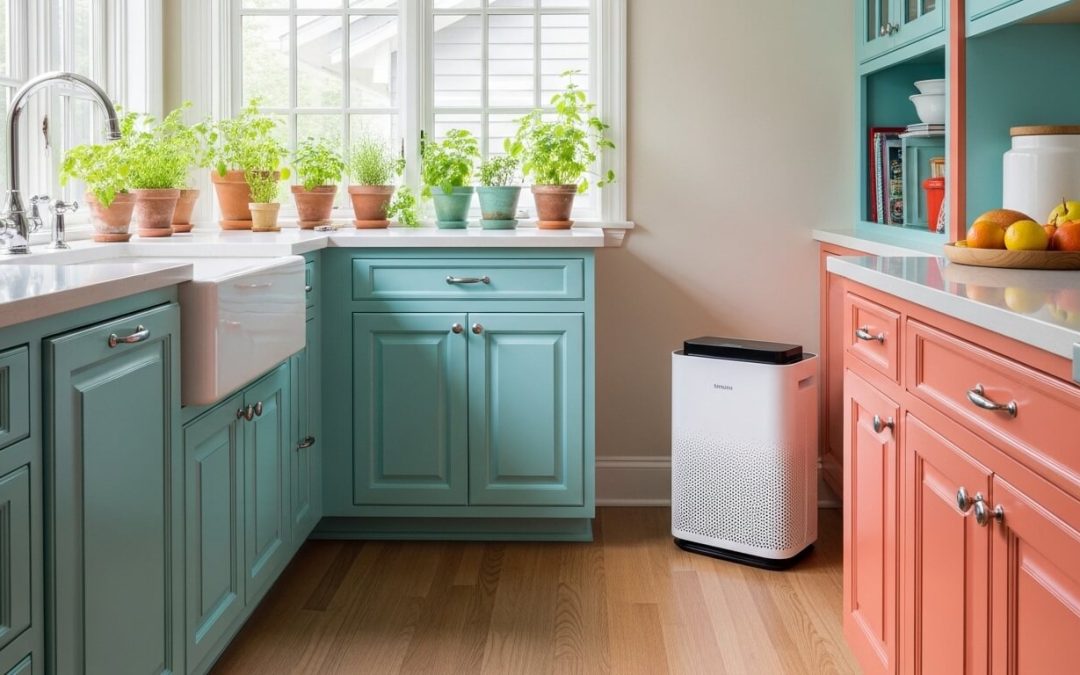
If you’re considering painted cabinets, it’s important to know how they can impact indoor air quality in your Dallas home. Many paints release volatile organic compounds (VOCs), which can lead to headaches and respiratory issues. Opt for low-VOC or zero-VOC products to enhance air quality and guarantee better ventilation when applying them. Maintaining indoor humidity can also help. There’s more to discover about how your choices affect both beauty and health in your home.
Understanding Volatile Organic Compounds (VOCs)
While you mightn’t realize it, the air in your home can be filled with volatile organic compounds (VOCs) that come from everyday products, including paints and finishes used on cabinets.
VOCs are organic chemicals that easily evaporate at room temperature, contributing to indoor air pollution. Common sources include cleaning products, air fresheners, and adhesives.
When you paint or refinish your cabinets, these compounds can be released into your living space, especially in poorly ventilated areas.
It’s essential to be aware of VOCs, as they can affect your health and overall comfort at home. Opt for low-VOC products when possible.
The Impact of VOCs on Indoor Air Quality
Understanding the impact of VOCs on indoor air quality is vital, especially if you’re planning to paint or refinish your cabinets. VOCs are released into the air as paints dry, leading to potential health risks.
You might experience headaches, dizziness, or respiratory issues due to these compounds. Even low exposure can affect your family’s overall well-being over time.
Proper ventilation is essential, but that alone mightn’t eliminate the problem. By being aware of VOC emissions, you can take steps to minimize their effects and create a healthier living environment for your family.
Knowledge is key to making informed choices.
Choosing Low-VOC Paints and Finishes
How can you guarantee your cabinets enhance your home’s beauty without compromising indoor air quality? The key is choosing low-VOC paints and finishes.
Look for products labeled as low or zero VOC, as these emit fewer harmful chemicals. Brands often provide detailed information about their formulations, so don’t hesitate to ask questions.
When shopping, prioritize water-based paints, which typically have lower VOC levels compared to oil-based options.
Also, consider finishes that are specifically designed for cabinetry; they’re made to withstand wear while maintaining a healthier environment.
Tips for Reducing VOC Emissions in Your Home
To create a healthier indoor environment, you can take several simple steps to reduce VOC emissions in your home.
First, choose low-VOC or VOC-free products whenever possible. Confirm proper ventilation by opening windows and using exhaust fans while cooking or painting.
Keep indoor humidity levels between 30-50% to minimize mold and mildew growth. Regularly maintain your HVAC system and replace filters as needed.
Opt for natural cleaning products, and avoid air fresheners that emit VOCs.
Finally, introduce houseplants, as they can help purify the air and absorb harmful chemicals, contributing to a safer living space for you and your family.
Benefits of Painted Cabinets Beyond Aesthetics
While many homeowners focus on the visual appeal of painted cabinets, they also offer several practical benefits that can enhance your living space.
Painted cabinets provide a protective layer, increasing durability against scratches, stains, and moisture. This can save you money on repairs or replacements in the long run.
Additionally, they can improve your home’s air quality when you choose low-VOC or zero-VOC paints, reducing harmful emissions.
A fresh coat can also increase your home’s value, making it more attractive to potential buyers.
Ultimately, painted cabinets blend beauty with functionality, creating a space you’ll love for years to come.
Frequently Asked Questions
How Long Does It Take for VOCS to Dissipate After Painting?
VOCs typically dissipate within a few hours to several days after painting, depending on ventilation and humidity.
You can speed up the process by opening windows and using fans to enhance airflow in the area.
Are There Specific Brands of Low-Voc Paints Recommended for Cabinets?
Yes, brands like Benjamin Moore, Sherwin-Williams, and Behr offer excellent low-VOC paints for cabinets.
You’ll find their products provide great durability and finish while minimizing indoor air pollutants, ensuring a healthier environment for your home.
Can I Paint Cabinets Myself or Should I Hire a Professional?
You can definitely paint cabinets yourself if you’re skilled and patient, but hiring a professional guarantees a smoother finish and saves time.
Weigh your confidence and experience against the project’s complexity before deciding.
What Are the Signs of Poor Indoor Air Quality From Painted Cabinets?
You might notice signs of poor indoor air quality from painted cabinets if you experience headaches, dizziness, respiratory issues, or a persistent chemical odor.
These symptoms often indicate harmful fumes from the paint affecting your environment.
How Often Should I Repaint Cabinets to Maintain Air Quality?
You should repaint your cabinets every five to seven years to maintain air quality.
Regular inspections can help identify wear or damage, ensuring you keep your home environment healthy and safe for your family.
Conclusion
In conclusion, when you’re considering painted cabinets for your home, it’s essential to prioritize indoor air quality. By opting for low-VOC paints and finishes, you can enhance your space’s aesthetics while keeping your family safe from harmful emissions. Remember to take additional steps to reduce VOC levels in your home for a healthier environment. With the right choices, you’ll enjoy beautiful cabinets and peace of mind knowing you’re protecting your family’s well-being.