
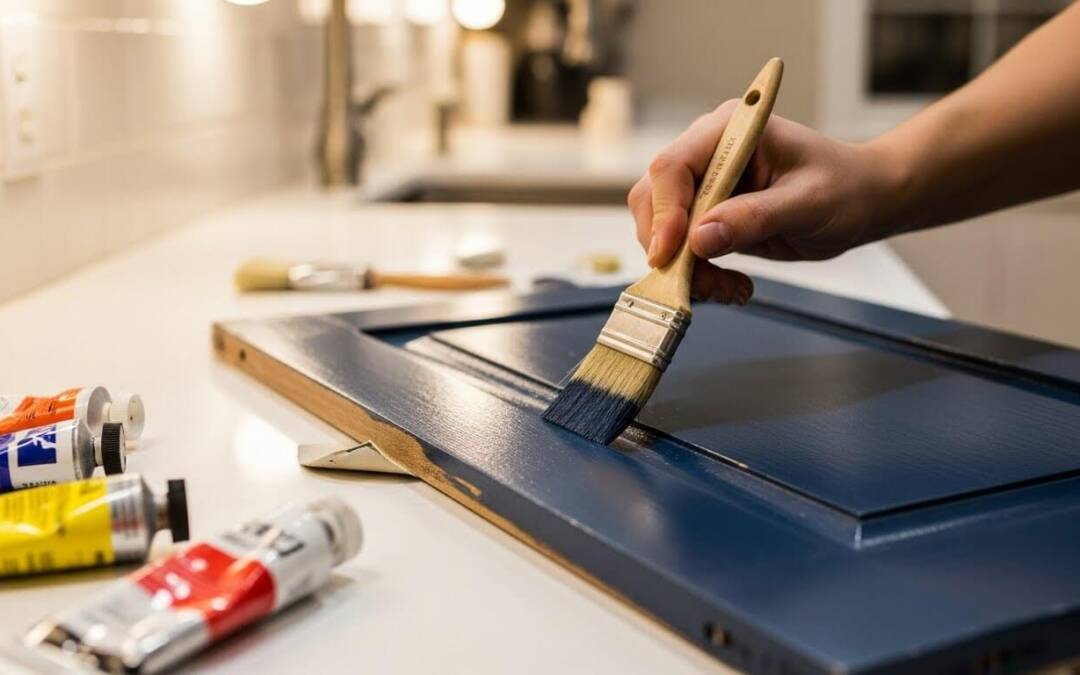
If your Dallas kitchen cabinets show signs of wear, like scratches, chips, or fading paint, it’s time for a touch-up. You’ll need basic supplies such as fine-grit sandpaper, a good quality paintbrush, and touch-up paint matching your cabinets. Clean the area first, then sand, prime if necessary, and apply paint carefully. Keep your cabinets in top shape with regular cleanings and inspections. Discover how you can easily maintain and revive your kitchen’s charm by following our tips.
Signs Your Cabinets Need Touch-Ups
You mightn’t realize it, but your cabinets can show clear signs they need a touch-up.
Look for scratches, chips, or fading paint that detracts from their appearance. If you notice peeling or flaking, it’s time to act. Dull surfaces can make your kitchen feel outdated, so keep an eye out for those lackluster finishes.
Additionally, if your cabinets have developed water stains or warping, you’ll want to address those issues promptly. Even minor wear and tear can affect your kitchen’s overall aesthetic, so don’t ignore these signs.
A little maintenance can go a long way in revitalizing your space.
Essential Tools and Materials for Cabinet Touch-Ups
When tackling cabinet touch-ups, having the right tools and materials on hand is vital for achieving a professional finish.
You’ll need fine-grit sandpaper to smooth out rough spots and a clean cloth to wipe away dust. A high-quality paintbrush or foam applicator helps guarantee even coverage, while touch-up paint in the exact cabinet color is essential.
Don’t forget a paint palette for mixing and a small tray for easy access. For stubborn stains, a mild cleaner can be handy.
Finally, keep painter’s tape ready to protect surrounding surfaces and create clean lines during your touch-up process.
Step-by-Step Guide to Touching Up Cabinet Paint
Touching up cabinet paint can rejuvenate your kitchen or bathroom with just a few simple steps.
First, clean the area you’ll touch up using a mild cleaner to remove grease and dirt.
Next, sand the chipped or damaged spot lightly to smooth it out.
After that, apply a primer if needed, then carefully paint over the area with your chosen color. Use a small brush for precision.
Allow it to dry completely, and if necessary, apply a second coat.
Finally, clean your brushes and store any leftover paint properly for future touch-ups.
Enjoy your refreshed cabinets!
Tips for Blending and Matching Paint Colors
Blending and matching paint colors is essential for achieving a seamless touch-up on your cabinets, especially since even slight variations can be noticeable.
First, use the same brand and finish as your original paint to maintain consistency. Test your paint on a small, inconspicuous area before applying it broadly.
It’s also helpful to take a sample of your existing cabinet paint to a local store for color matching. If you’re unsure, consider using a paint color app that can help visualize how different shades will look together.
Finally, apply thin layers to build up the color gradually, ensuring a smooth blend.
Preventative Measures to Extend the Life of Your Cabinets
To guarantee your cabinets last for years to come, implementing preventative measures is key.
Regularly clean your cabinets with a gentle, non-abrasive cleaner to prevent grime buildup. Avoid using harsh chemicals that can damage the finish.
Keep humidity levels in check to prevent warping or swelling, especially in kitchens. Use cabinet liners to protect surfaces from scratches and spills.
Be mindful of how you handle cabinet doors; always use the handles instead of pushing or pulling the doors themselves.
Finally, schedule periodic inspections for any signs of wear or damage, so you can address issues before they escalate.
Frequently Asked Questions
How Often Should I Perform Cabinet Touch-Ups?
You should perform cabinet touch-ups every six months to a year, depending on wear and tear.
Regularly inspecting your cabinets and addressing scratches or chips promptly keeps them looking fresh and well-maintained.
Can I Use Leftover Paint for Touch-Ups?
Yes, you can use leftover paint for touch-ups, as long as it’s the same color and finish.
Just make certain it’s well-mixed and test it on a small area first to guarantee a perfect match.
Will Touch-Ups Affect the Overall Finish of My Cabinets?
Yes, touch-ups can affect the overall finish of your cabinets.
If the paint doesn’t match perfectly or if you don’t blend it well, you might notice inconsistencies in color and sheen.
Careful application helps maintain uniformity.
Are There Eco-Friendly Paint Options for Touch-Ups?
Yes, there are eco-friendly paint options for touch-ups.
Look for low-VOC or zero-VOC paints that use natural ingredients.
These options reduce harmful emissions while still providing a durable and attractive finish for your cabinets.
What Should I Do if I Run Out of Matching Paint?
If you run out of matching paint, try to find the same brand and color code online or at a local store.
Alternatively, consider mixing paints to achieve a close match for your touch-ups.
Conclusion
By staying on top of cabinet touch-ups and maintenance, you can keep your Dallas kitchen looking fresh and vibrant for years to come. Regularly checking for signs of wear and having the right tools on hand makes the process easier. With a little effort, you can blend and match paint colors seamlessly. Remember, taking preventative measures now will save you time and money down the road, ensuring your cabinets stay beautiful long-term.