
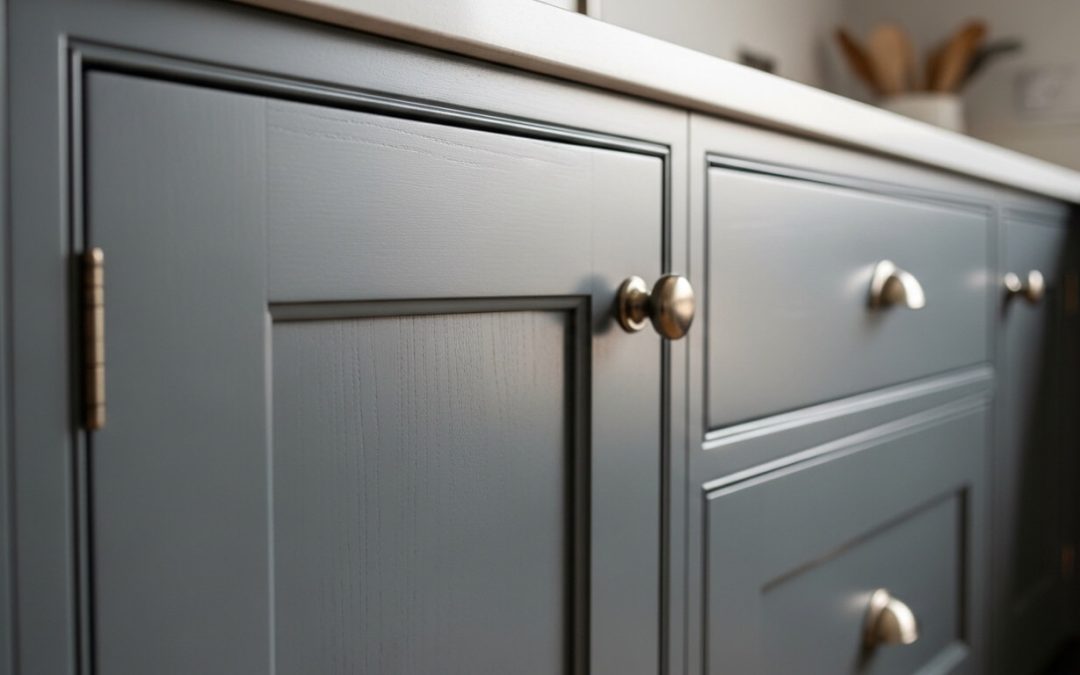
When painting kitchens with uneven or settled cabinet frames, start by evaluating for any damage or loose joints. Prepare the cabinets by cleaning surfaces and filling in imperfections. Use high-quality paint with a satin or semi-gloss finish for durability. Apply the paint evenly, working in thin coats, and sand lightly between layers to achieve a smooth finish. Protect your cabinets with regular maintenance. Discover more tips to guarantee your project turns out perfectly.
Assessing Cabinet Frame Issues
When evaluating cabinet frame issues, you should start by inspecting the structure for any signs of damage or wear. Look for cracks, warps, or loose joints that might affect stability.
Pay attention to the doors and drawers; if they don’t align properly, it could indicate a deeper issue. Check for signs of moisture damage, like swelling or discoloration, especially if your cabinets are near sinks.
If you notice any of these problems, take notes. Addressing these concerns early can save you time and money later, ensuring a smooth painting process and a beautiful finish for your kitchen cabinets.
Preparing Your Cabinets for Painting
Before you start painting your cabinets, it’s important to properly prepare them to guarantee the best results.
Begin by removing all hardware, including knobs and hinges. Next, clean the surfaces thoroughly to eliminate grease and dust.
If your cabinets have any imperfections, fill them with wood filler and sand the areas smooth. For a better bond, lightly sand the entire surface to create a rough texture.
Finally, wipe down the cabinets with a damp cloth to remove any dust from sanding. Taking these steps will help you achieve a smooth, professional-looking finish when you start painting.
Choosing the Right Paint and Tools
Selecting the right paint and tools is essential for achieving a stunning cabinet makeover. You’ll want to choose a high-quality, durable paint, preferably one designed for cabinetry.
Look for paint with a satin or semi-gloss finish, as these provide better durability and easier cleaning. For tools, invest in a good brush and a foam roller to guarantee even application.
Don’t forget painter’s tape to protect areas you don’t want painted. A spray gun can also be a great option for larger projects.
With the right supplies, you’ll set yourself up for a successful cabinet transformation!
Techniques to Achieve a Smooth Finish
To achieve a smooth finish on your cabinets, you’ll need to focus on preparation and technique. Start by sanding the surfaces lightly to create a uniform texture.
Use a high-quality primer to fill in any imperfections and enhance adhesion. When applying paint, opt for a foam roller or a fine-bristle brush, as they minimize brush marks.
Work in thin, even coats and allow adequate drying time between layers. Finally, consider a light sanding between coats to further smooth the surface.
This meticulous approach will guarantee your cabinets look professional and polished, transforming your kitchen beautifully.
Tips for Maintaining Your Newly Painted Cabinets
Maintaining your newly painted cabinets is essential for keeping them looking fresh and vibrant.
Start by cleaning them regularly with a damp cloth and mild soap to avoid harsh chemicals that can damage the finish. Avoid using abrasive scrubbers that could scratch the surface. If you notice scuff marks, a gentle touch with a soft sponge usually does the trick.
Additionally, keep your cabinets dry and avoid excessive moisture, as it can warp the paint.
Finally, consider applying a protective wax or sealant every few months to enhance durability.
With these tips, your cabinets will stay beautiful for years to come.
Frequently Asked Questions
Can I Paint Over Existing Cabinet Stains or Finishes?
Yes, you can paint over existing cabinet stains or finishes.
Just make sure to clean the surfaces thoroughly, lightly sand them for better adhesion, and use a suitable primer for the best results.
How Do I Fix Gaps in Settled Cabinet Frames Before Painting?
You can fill gaps in settled cabinet frames by using wood filler or caulk.
Apply the filler, let it dry, then sand it smooth.
Once it’s even, you’re ready to paint your cabinets.
Is It Necessary to Remove Cabinet Doors for Painting?
You don’t have to remove cabinet doors for painting, but it can make the process easier and guarantee a smoother finish.
If you choose to keep them on, just be careful with overspray.
What Type of Primer Works Best for Uneven Surfaces?
A high-build primer works best for uneven surfaces.
It fills in imperfections and creates a smooth base for your paint. Just apply it evenly, and you’ll achieve a professional-looking finish that enhances your cabinets beautifully.
How Long Should I Wait Between Paint Coats on Cabinets?
You should wait about two to four hours between paint coats on cabinets, depending on the paint type and humidity.
Always check the manufacturer’s instructions to guarantee ideal drying times for the best finish.
Conclusion
In conclusion, tackling the challenge of painting kitchen cabinets with uneven or settled frames is entirely doable with the right approach. By assessing the frame issues, prepping your cabinets properly, and selecting the right tools and techniques, you can achieve a stunning finish. Remember to maintain your newly painted cabinets to keep them looking fresh for years to come. With these tips in hand, you’re ready to transform your kitchen into a beautiful space you’ll love!