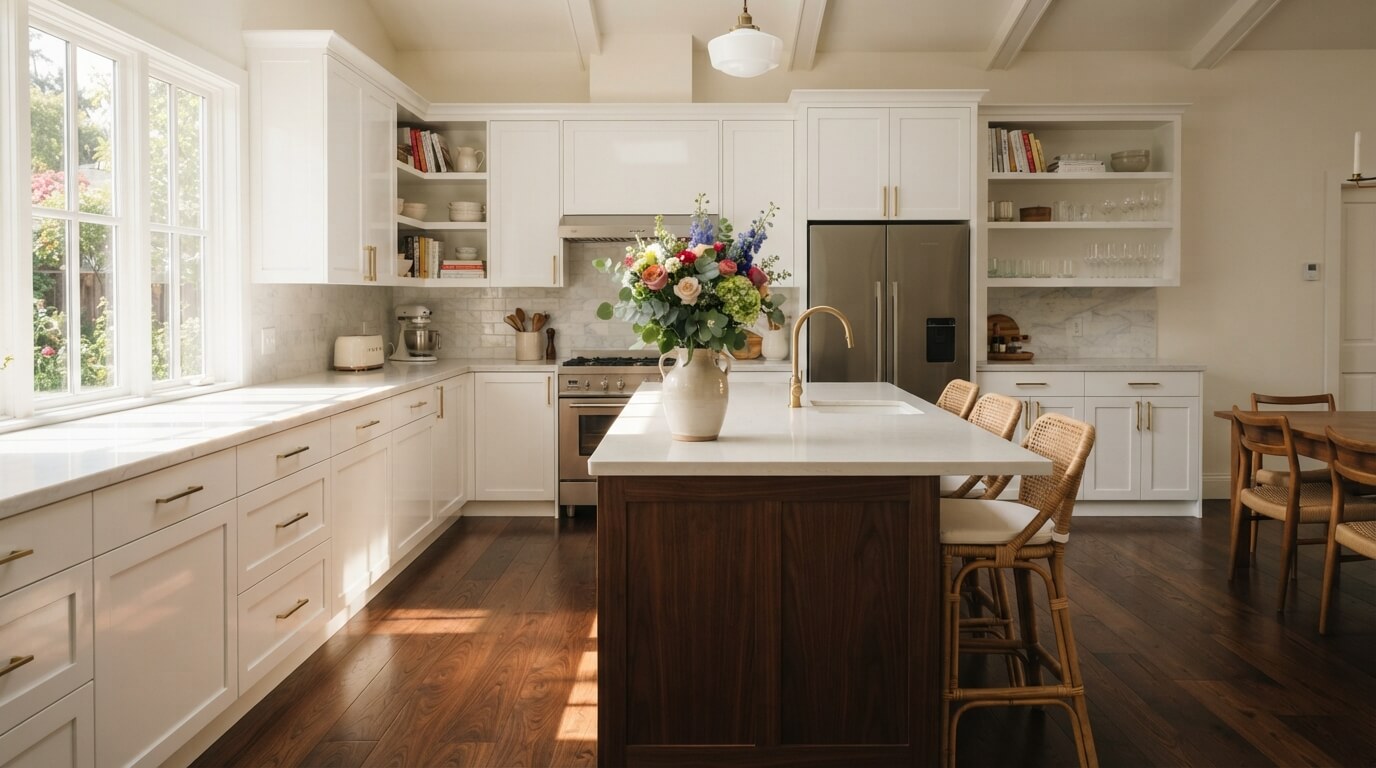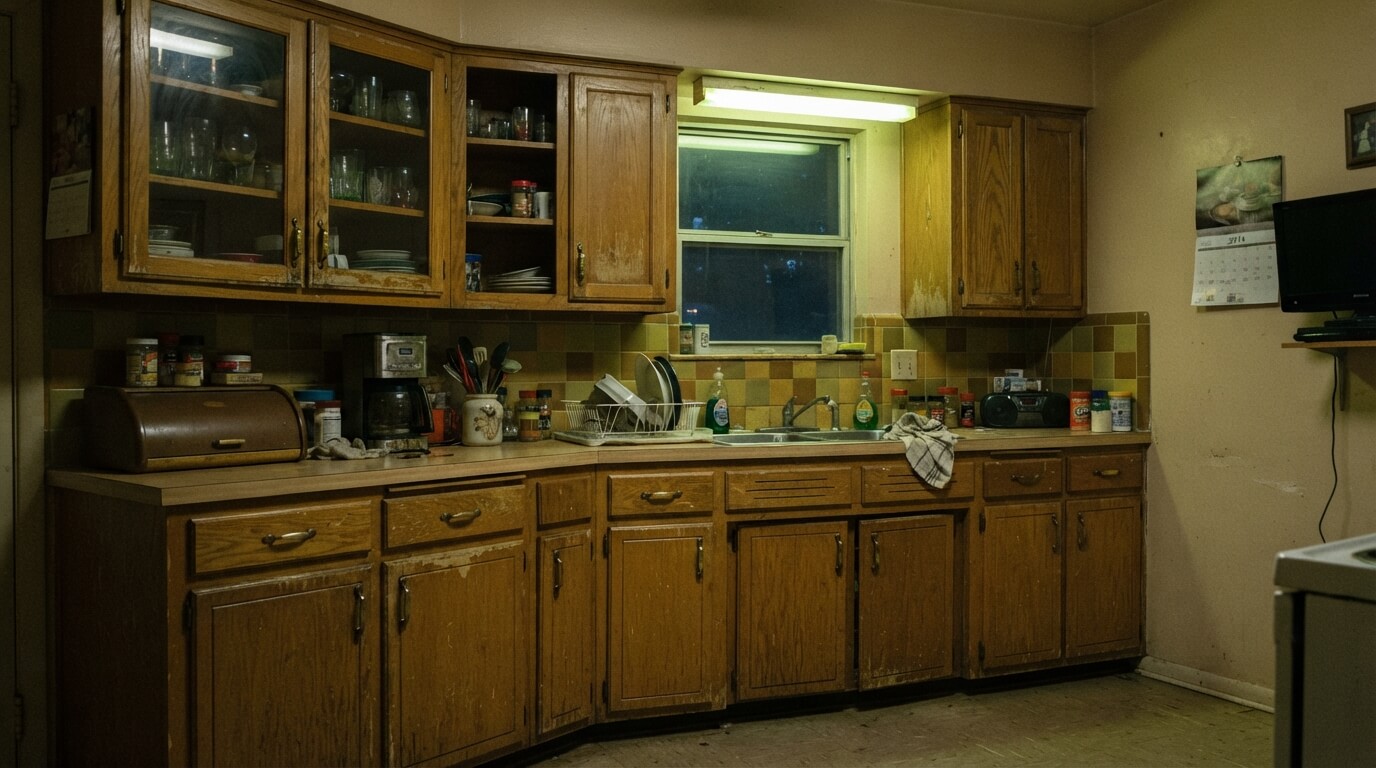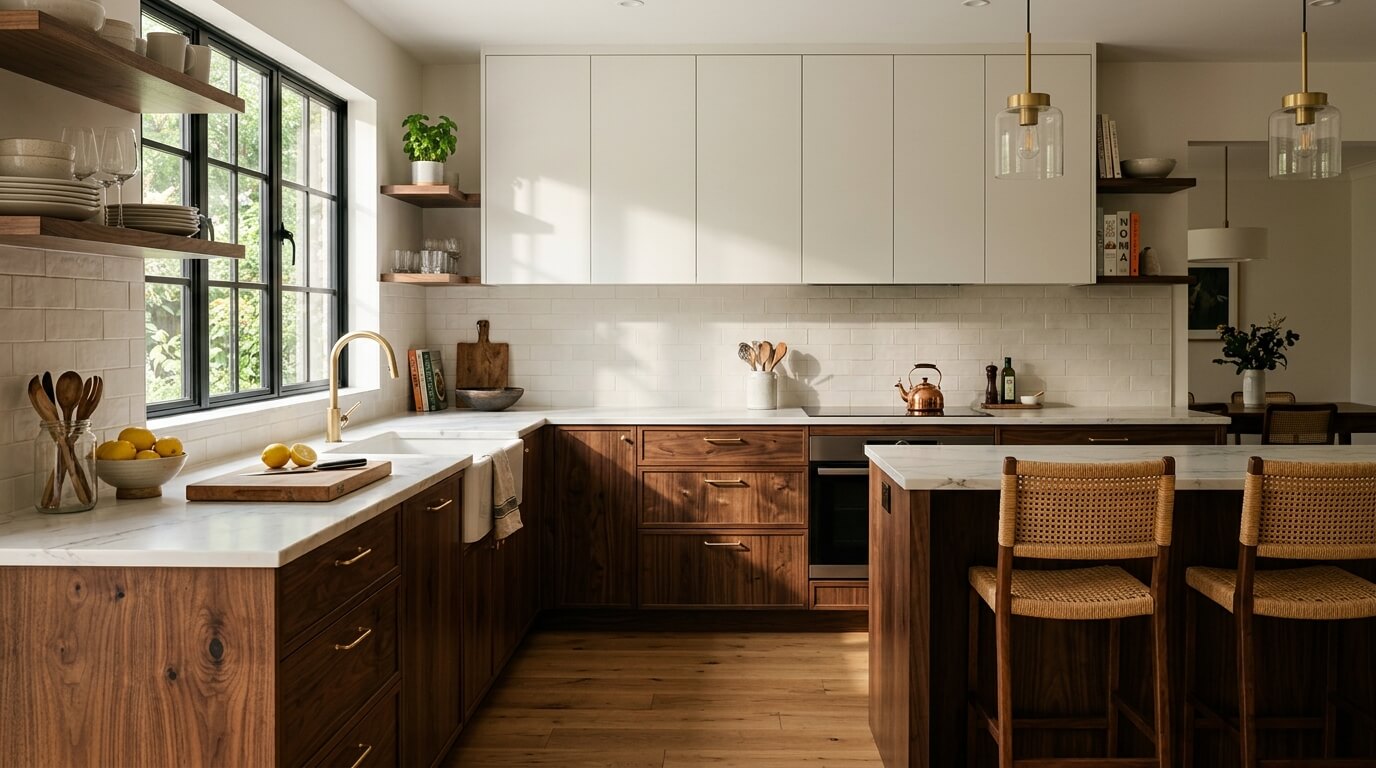
When painting kitchens with mixed materials like wood and laminate, you should start by cleaning and lightly sanding both surfaces for better paint adhesion. Use a primer designed for mixed materials before applying high-quality acrylic or polyurethane paint. Choose a cohesive color palette that complements your countertops and flooring for a unified look. Selecting consistent hardware can enhance the overall design. Stick around to uncover more tips for achieving a flawless finish and cohesive kitchen style.
Understanding the Basics of Painting Wood and Laminate Cabinets
When you decide to give your kitchen a fresh look by painting your cabinets, it’s important to understand the differences between wood and laminate surfaces.
Wood cabinets, with their natural grain, absorb paint well, allowing for a smooth finish. They’re often easier to sand and prep, enabling better adhesion.
On the other hand, laminate surfaces are non-porous, meaning paint may not stick as effectively. You’ll need to choose the right primer and paint specifically designed for laminate to achieve lasting results.
Knowing these distinctions helps you select the best approach for your cabinet painting project, ensuring a stunning transformation.
Best Techniques for Preparing Mixed Material Surfaces
To achieve a flawless finish when painting cabinets made from mixed materials, you need to take a few key steps in preparation.
Start by cleaning surfaces thoroughly with a degreaser to remove grease and grime. Next, lightly sand both wood and laminate areas to create a good bonding surface for the paint.
Use a primer designed for mixed materials; this guarantees better adhesion and durability. Be sure to fill any dents or scratches with wood filler, then smooth those areas with sandpaper.
Finally, wipe down all surfaces with a damp cloth to eliminate dust before applying your chosen paint.
Color Palettes That Complement Both Wood and Laminate
After preparing your mixed material surfaces, choosing a color palette that harmonizes with both wood and laminate becomes key to achieving a cohesive look in your kitchen.
Consider warm neutrals like taupe or soft beige, which can complement the richness of wood while balancing the sleekness of laminate. You might also explore cool tones like sage green or light gray, as they can create a rejuvenating contrast.
For a bolder choice, deep navy or charcoal can add sophistication, working beautifully with both finishes.
Recommended Finishes for Durability and Style
Choosing the right finish for your kitchen cabinets not only enhances their visual appeal but also guarantees they stand up to daily wear and tear.
For durability, consider using a high-quality acrylic or polyurethane paint. These finishes resist scratches and stains, making them ideal for busy kitchens.
If you prefer a more natural look, a clear varnish can showcase the wood grain while providing a protective layer.
Don’t forget about matte or satin finishes; they offer a stylish, modern touch while being easier to maintain.
Ultimately, select a finish that aligns with your aesthetic and lifestyle for lasting beauty and functionality.
Tips for Achieving a Cohesive Look in Your Kitchen
While it might seem challenging to create a cohesive look in your kitchen, it can be achieved with thoughtful planning and attention to detail.
Start by choosing a color palette that complements both wood and laminate materials. Select cabinet colors that harmonize with your countertops and flooring. Incorporate consistent hardware across all cabinets for a unified appearance.
You can also balance textures by mixing finishes, like matte and gloss, to add depth without clashing. Finally, consider your lighting; warm tones can tie elements together and enhance the overall ambiance.
With these tips, your kitchen will feel like a well-coordinated space.
Frequently Asked Questions
Can I Paint Over Existing Cabinet Hardware?
Yes, you can paint over existing cabinet hardware, but proper preparation is key.
Clean the surfaces thoroughly, use a primer designed for metal, and choose a durable paint to guarantee a long-lasting finish.
How Do I Handle Cabinet Doors With Different Textures?
You can handle cabinet doors with different textures by lightly sanding them to guarantee paint adhesion.
Use a primer for a uniform base, then apply paint evenly, ensuring to match the texture with appropriate tools.
What Tools Do I Need for Painting Mixed Materials?
You’ll need a high-quality paintbrush, foam roller, painter’s tape, sandpaper, primer, and acrylic paint.
A sprayer can help for smooth finishes.
Don’t forget drop cloths to protect your floors and surfaces from spills.
How Long Does the Painting Process Typically Take?
The painting process typically takes about two to three days.
You’ll need time for prep, painting, and drying.
Don’t rush it; allowing proper drying guarantees a smooth, long-lasting finish for your cabinets.
Can I Use Spray Paint for Laminate Surfaces?
Yes, you can use spray paint on laminate surfaces, but make certain to choose a paint specifically designed for laminate.
Proper surface preparation and priming will also help guarantee better adhesion and a durable finish.
Conclusion
Incorporating both wood and laminate in your kitchen cabinets doesn’t have to be daunting. By understanding the basics of painting these mixed materials and using the right techniques, you can achieve a stunning look. Choose complementary colors and durable finishes that enhance your space. With a little creativity and the right approach, you’ll create a cohesive and stylish kitchen that reflects your personal taste. So grab your paintbrush and get started on your cabinet transformation!
Cabinet Refacing Dallas connects homeowners across Dallas with Cabinet Transformer for cabinet painting. Book a free in-home consultation or call (469) 281-7313.
Last updated October 9, 2026