
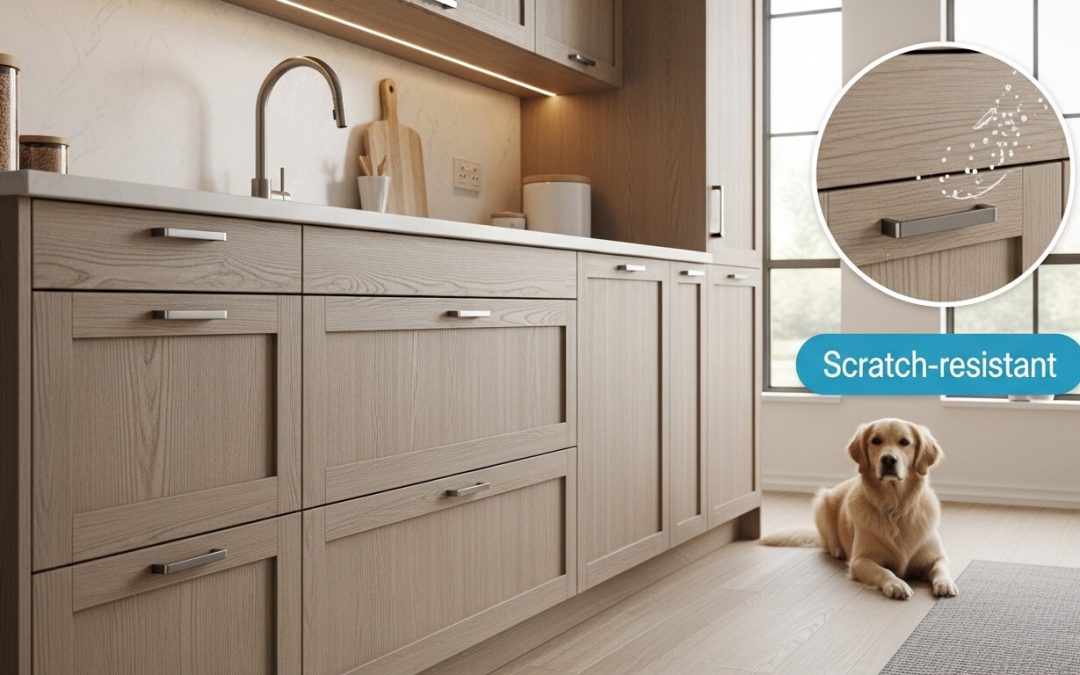
When painting cabinets in homes with pets, you need durable finishes like semi-gloss or satin, which resist scratches and stains. Choose pet-friendly materials like laminate that hide fur and are easy to clean. To minimize scratches, use protective topcoats and keep your pets’ nails trimmed. For managing hair, opt for smooth surfaces and maintain a cleaning routine. Don’t forget to address odors with stain-resistant paints and pet-safe cleaners. Discover more helpful tips to guarantee a pet-friendly space.
Choosing Durable Paint Finishes
When you’re painting cabinets in a home with pets, choosing a durable paint finish is crucial to withstand scratches and stains.
Opt for semi-gloss or satin finishes, as they offer better durability and are easier to clean. These finishes resist moisture and can handle the wear and tear from playful paws.
It’s also wise to choose a paint that’s specifically formulated for cabinetry, guaranteeing a tougher surface.
Don’t forget to test your chosen finish in a small area first. This way, you can verify it meets your needs without compromising on aesthetics.
Your cabinets will thank you for it!
Selecting Pet-Friendly Materials
After choosing a durable paint finish for your cabinets, the next step is selecting pet-friendly materials that can withstand the daily challenges of a home with furry friends.
Consider using laminate or engineered wood, as they’re resistant to scratches and easy to clean. Avoid materials like untreated wood, which can absorb odors and stains.
You might also want to look into finishes that are non-toxic and low in volatile organic compounds (VOCs) to keep your pets safe.
Finally, choose colors and textures that can hide fur and dirt, making maintenance a breeze while still looking stylish in your home.
Techniques to Minimize Scratches
One effective technique to minimize scratches on your cabinets is to apply a protective topcoat.
Choose a durable finish, like polyurethane or polycrylic, which can withstand your pets’ playful antics. Additionally, consider using cabinet hardware, like handles and knobs, to reduce direct contact with the surfaces.
Regularly inspecting and maintaining your cabinets helps catch any early signs of wear. You can also position furniture or rugs strategically to limit your pet’s access to cabinet doors.
Finally, keep your pets’ nails trimmed to further decrease the chances of scratches. Implementing these strategies will help keep your cabinets looking pristine.
Managing Pet Hair and Cleanability
Managing pet hair can feel like a never-ending battle, but with the right strategies, you can keep your cabinets clean and tidy.
Start by choosing a smooth, wipeable cabinet finish that resists hair accumulation. Regularly use a microfiber cloth or electrostatic duster to trap and remove hair effectively.
Consider installing cabinet doors with a tight seal to prevent hair from getting inside.
Finally, establish a cleaning routine that includes vacuuming or sweeping frequently, especially in high-traffic pet areas.
Addressing Odors and Stains
Odors and stains from pets can quickly infiltrate your home, especially in areas like the kitchen where cabinets are often exposed to spills and messes.
To combat this, choose cabinet paints that are stain-resistant and easy to clean. Regularly wipe down surfaces with pet-safe cleaners to eliminate lingering smells and prevent stains from setting in.
If you notice persistent odors, consider using odor-neutralizing sprays or baking soda to absorb unwanted scents. For severe stains, a gentle scrub with a vinegar-water solution can help.
Frequently Asked Questions
What Types of Paint Are Safe for Pets During Application?
You should choose low-VOC or zero-VOC paints during application to keep your pets safe.
These options minimize harmful fumes, allowing you to paint without worrying about your furry friends’ health and comfort.
How Often Should I Repaint Cabinets in Pet-Heavy Households?
You should repaint cabinets in pet-heavy households every three to five years, depending on wear and tear.
Regularly check for scratches or odors, and touch up any areas needing attention to maintain their appearance.
Can I Use Cabinet Painting to Cover up Scratches?
Yes, you can use cabinet painting to cover up scratches.
Just make sure to prep the surface well, choose a durable paint, and apply multiple coats for the best finish.
Your cabinets will look refreshed!
What Are the Best Colors for Hiding Pet Hair?
The best colors for hiding pet hair are medium to dark shades, like charcoal gray or deep navy.
These tones blend well with hair, making it less noticeable and keeping your cabinets looking clean and stylish.
How Can I Maintain Painted Cabinets With Active Pets?
To maintain painted cabinets with active pets, regularly wipe surfaces with a damp cloth, use a pet-friendly cleaner, and touch up any scratches promptly.
Keeping cabinets clean will help minimize odors and maintain their appearance.
Conclusion
By keeping these considerations in mind, you can create a beautiful and functional space that accommodates your furry friends. Choose durable paint finishes, select pet-friendly materials, and employ techniques to minimize scratches. Don’t forget to manage pet hair for easy cleaning and tackle odors effectively. With the right approach, your cabinets can withstand the challenges of pet ownership while still looking great. Embrace these tips, and enjoy a stylish home that both you and your pets can love!